American Beach Water & Sewer Project Recognized by EPA
The Nassau County Board of County Commissioners (BOCC) proudly announces that the State of Florida has received two prestigious national awards recognizing its support of the American Beach Water and Sewer Conversion Project, an initiative led and driven by Nassau County to improve infrastructure and protect this historic community.
The awards were presented by the U.S. Environmental Protection Agency (EPA) as part of its 2026 recognition of 48 outstanding water infrastructure projects across the country. Funded in part through State Revolving Fund (SRF) programs, these projects highlight the vital role of modern water infrastructure in protecting public health and supporting economic prosperity.
Through its partnership with Nassau County, the State of Florida earned the AQUARIUS Award for Excellence in Innovative Financing and the PISCES Award for Community Engagement for its support of the American Beach Water and Sewer Conversion Project.
EPA Assistant Administrator for Water Jessica Kramer emphasized that SRF investments are helping communities modernize aging systems, strengthen resilience, and ensure access to safe, reliable water, demonstrating the impact of robust federal and state collaboration.
Locally, that collaboration resulted in the successful delivery of a centralized water and wastewater system for the American Beach community. The project was made possible through a $1.32 million Drinking Water State Revolving Fund (DWSRF) loan, federal grants, and additional state and local funding, allowing for the replacement of failing wells and septic systems while providing reliable, affordable service to residents. Importantly, the new infrastructure also enhances fire protection capabilities by supporting fire suppression through improved water flow and hydrant access, significantly strengthening public safety for the community.
The project also gained national recognition for its robust community engagement efforts. Early in the process, 79 residents submitted letters of commitment supporting the transition to a centralized sewer system, followed by a community straw ballot demonstrating support for funding mechanisms. The creation of the American Beach Water & Sewer District Advisory Board, along with years of public meetings, ensured residents remained actively involved throughout the project.
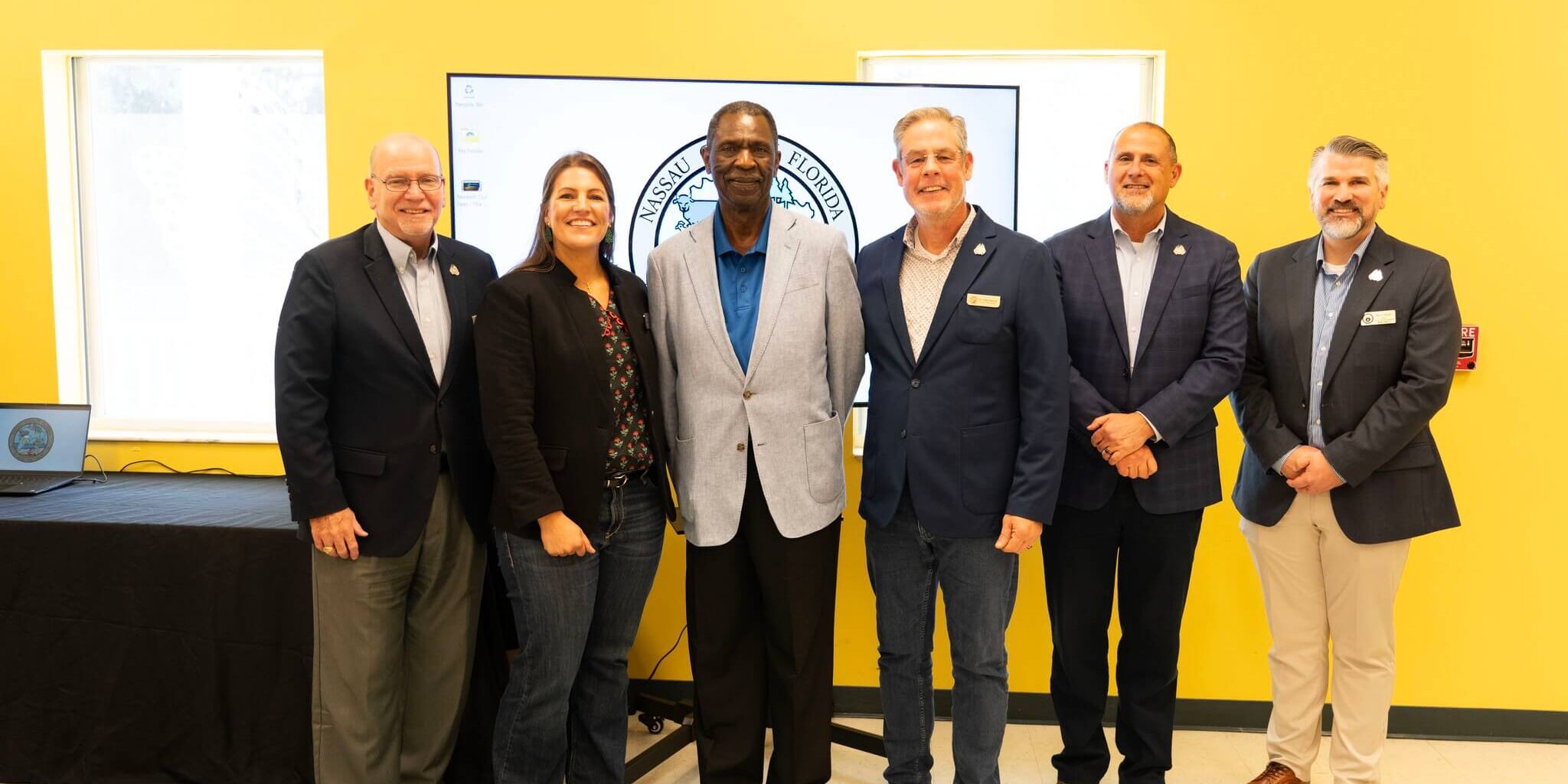
District Two County Commissioner A.M. “Hupp” Huppmann accepted the awards with the State of Florida at the Council of Infrastructure Financing Authorities (CIFA) Summit on Water Infrastructure in Washington, D.C., on April 8, 2026, highlighting the strong partnership between federal, state, and local entities.
BOCC Chair Alyson McCullough stated, “We are incredibly proud of the State of Florida’s recognition through these prestigious awards. The American Beach Water and Sewer Project represents the kind of innovative, community-focused work that sets a standard for other communities to follow. Through collaboration, careful planning, and creative financing, we were able to deliver modern infrastructure at no cost to residents, while ensuring their voices guided every step of the project. This recognition reflects the strength of our partnerships and the dedication of everyone involved.”
The project included the installation of more than 13,000 linear feet of gravity sewer and 2,300 linear feet of force main, for 350 parcels. In total, approximately $12 million was assembled from multiple funding sources, including State Revolving Fund programs, legislative appropriations, grants, and local contributions.
The County extends its sincere gratitude to the Florida Governmental Utility Authority (FGUA), the Florida Department of Environmental Protection, the U.S. Environmental Protection Agency, the St. Johns River Water Management District, and the Advisory Board members, whose leadership and support were instrumental in making this project a reality.
Special recognition is also extended to Senior Management Analyst Amy Bell, whose dedicated project management and ongoing communication with residents played a critical role in the project’s success.